Authors: Salena Husband, Katarina Cankar, Olivier Catrice, Stan Chabert, Silvio Erler
Journal: Frontiers in Plant Science, Vol. 16, May 2025
Abstract
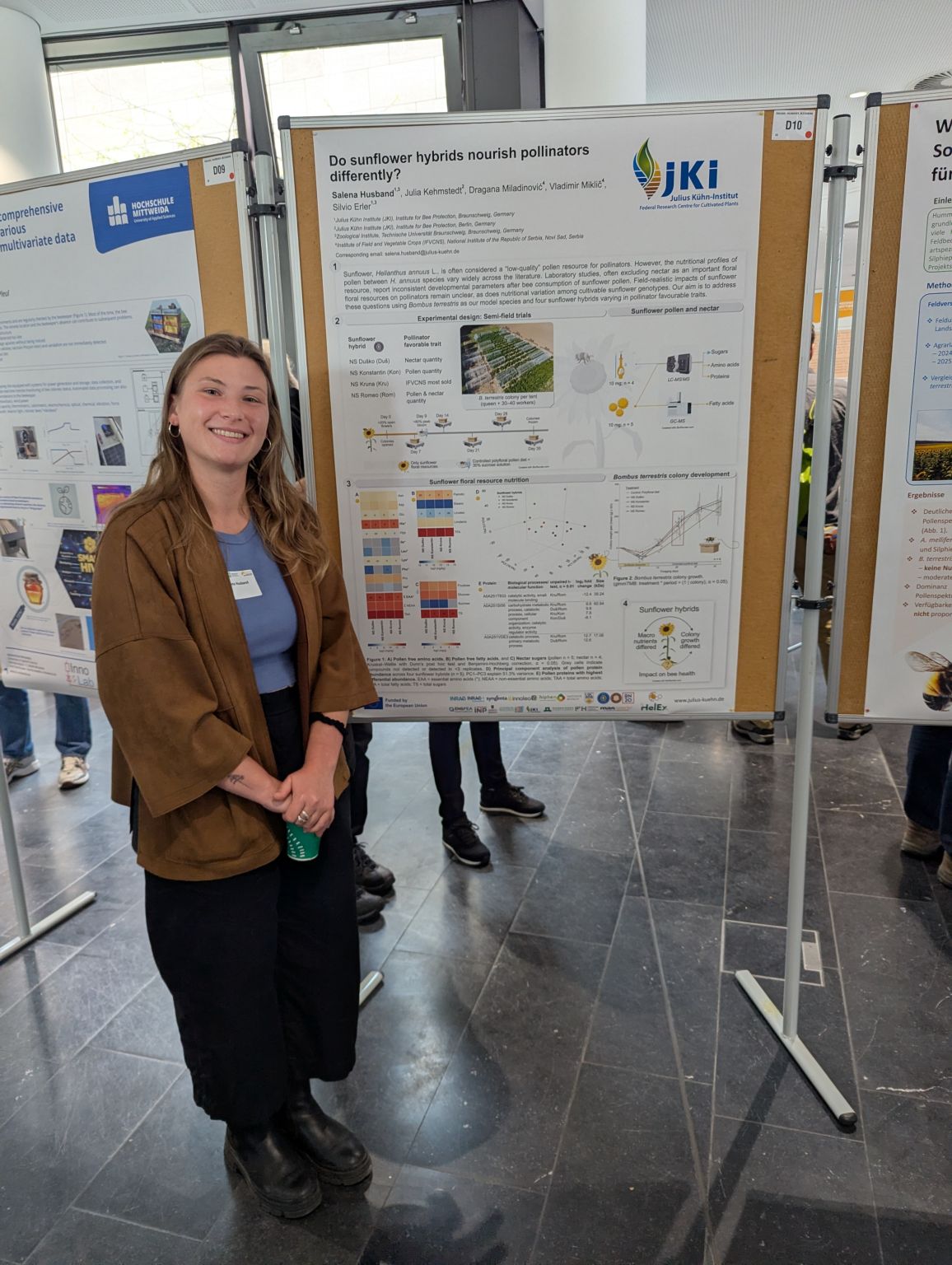
Sunflower (Helianthus annuus L.) is a prominent global oilseed crop with rising cultivation and appeal as a bee-friendly plant, providing abundant floral resources for pollinators. Mass-flowering crops can increase resource availability, and sunflower offers a valuable opportunity to relieve pollen scarcity in late summer across agricultural landscapes. This, however, should be taken with caution as they also provide a homogeneous source of nutrition.
This review summarises the nutritional profile of sunflower pollen, nectar, bee bread and honey, and assesses their effects on bee survival, development and health. It also covers pollinator syndromes that extend beyond floral resources, including visual and olfactory attraction. While sunflower pollen’s nutritional quality is often questioned due to lower protein and amino-acid deficiencies, its nutrient content, like nectar sugars, shows large variability. Pollen consumption has mixed effects on Apis mellifera and Bombus species, sometimes negatively impacting development and survival, but consistently reduces infection intensity of the gut parasite Crithidia bombi in bumblebees. The authors also highlight the role of nectar characteristics (sugar content and volume) and floral morphology (pigmentation, corolla length) on pollinator foraging preferences.
These findings feed directly into the HelEx project’s work on breeding sunflower varieties that better support pollinator health across European agricultural landscapes.
Open Access: Yes • Peer-reviewed: Yes • DOI: 10.3389/fpls.2025.1552335